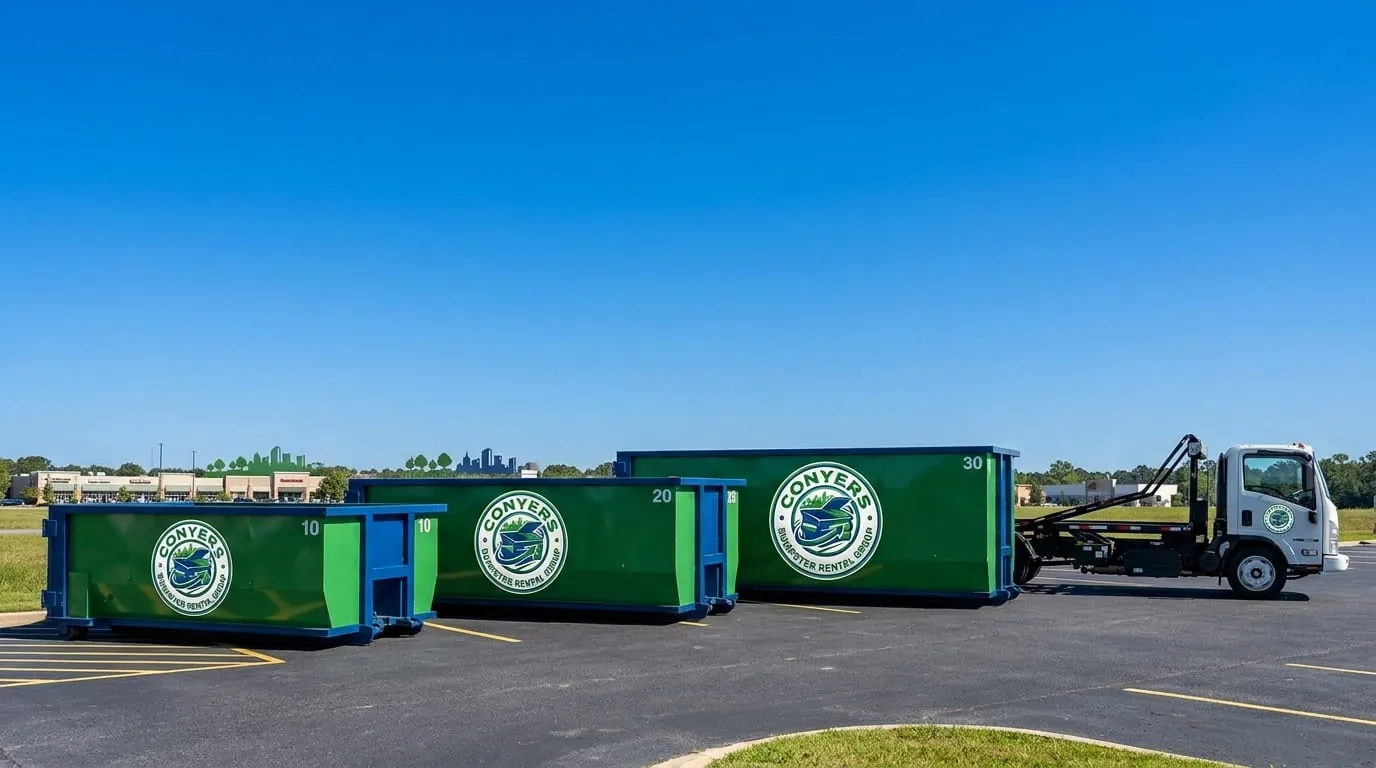
If you live in Conyers or anywhere in Rockdale County, sorting out where your trash, recycling, yard debris, and old renovation materials are supposed to go can feel more complicated than it should. Between city curbside pickup, the county's solid waste operations, private haulers, and the occasional special drop-off event, there are a lot of moving parts. This guide walks through how waste and recycling generally work in our corner of metro Atlanta, what belongs in your curbside bin versus what needs a dumpster or a trip to a disposal facility, and how to handle the trickier categories like construction debris, household hazardous waste, electronics, and storm damage responsibly.
One thing to keep in mind up front: programs, dates, and accepted-materials lists change. Rockdale County and the City of Conyers periodically update their schedules, convenience-center hours, and special collection events, and Georgia's Environmental Protection Division (EPD) sets the rules that govern landfills and recycling markets. So while the categories below are stable and accurate in general terms, always confirm the current specifics with the City of Conyers, Rockdale County Solid Waste, or Georgia EPD before you load up the car or schedule a haul.
How Waste and Recycling Are Organized in Conyers and Rockdale County
Residential waste service in our area is a mix of municipal and county programs, plus private subscription haulers depending on exactly where your home sits. Inside the Conyers city limits, service arrangements differ from unincorporated Rockdale County, and some neighborhoods contract directly with a private company. If you are new to the area or have never checked, the fastest way to find out who serves your address is to call the City of Conyers or Rockdale County directly and ask which provider covers your street and what day your pickup falls on.
In broad strokes, most households have three streams to think about: general household trash (garbage), curbside recycling, and yard or organic waste. Each stream has its own rules about what it will accept, and mixing them incorrectly is one of the most common reasons recycling loads get rejected or contaminated. Getting the sorting right at home is genuinely the single most valuable thing you can do to keep the whole system working.
What Goes in Curbside Recycling
Curbside recycling programs in the Conyers area generally follow the same "clean, empty, and dry" logic used across Georgia. The classic accepted materials are:
- Paper and cardboard — office paper, mail, newspaper, magazines, paperboard (cereal-type boxes), and flattened corrugated cardboard. Keep it dry; wet or greasy paper is a contaminant.
- Metal cans — aluminum beverage cans and steel/tin food cans, rinsed out.
- Plastic bottles and jugs — typically containers marked with resin codes 1 and 2, such as water bottles, milk jugs, and detergent jugs. Rinse and empty them.
- Glass — accepted in some programs and not others, and sometimes only at a drop-off point rather than curbside. This is exactly the kind of detail worth confirming locally.
Just as important is knowing what does not belong in the curbside bin, because "wish-cycling" (tossing in something you hope is recyclable) does real damage. Keep these out of curbside recycling:
- Plastic bags, film, and bubble wrap — these tangle in sorting machinery. Many grocery stores take clean plastic bags back at store-front bins.
- Food-soiled containers, greasy pizza boxes, and used paper towels.
- Styrofoam and foam takeout containers.
- "Tanglers" like garden hoses, cords, and holiday lights.
- Scrap metal, propane tanks, batteries, and electronics.
- Construction debris, wood, and drywall.
When in doubt, leave it out of the recycling bin. A single load contaminated with the wrong materials can send an entire truckload to the landfill, so being a little conservative helps everyone.
Convenience Centers, Transfer Stations, and Drop-Off Options
For items that do not fit the curbside model — bulky goods, larger volumes of recyclables, or waste from homes without curbside service — Rockdale County operates solid waste facilities and drop-off options designed to keep material out of ditches and illegal dump sites. Convenience centers and transfer stations typically accept household garbage and certain recyclables, and may have separate areas or fees for tires, appliances, and other special items.
Hours, accepted materials, resident ID or decal requirements, and any per-load fees vary and are updated from time to time, so check the current Rockdale County Solid Waste information before you go. Bring proof of residency if the facility requires it, secure your load so nothing blows out on the way, and be prepared to sort items into the correct bays once you arrive.
Construction and Renovation Debris
Renovation and demolition generate a category of waste that curbside programs simply are not built to handle. Drywall, lumber, flooring, tile, roofing shingles, old cabinetry, concrete, and brick add up fast in both weight and volume, and most of it is banned from curbside collection entirely. This is where a roll-off dumpster becomes the practical answer.
A lot of construction debris is actually divertible from the landfill. Clean wood, metal, cardboard packaging, and concrete or masonry can often be recycled or repurposed through specialty facilities, and some materials — intact fixtures, doors, appliances in working order — can be donated to building-material reuse outlets. Sorting on site, even loosely, increases how much gets diverted. For a deeper walkthrough of handling these materials, see our guide on how to dispose of construction debris, and if you are unsure whether a specific material is allowed in a container, our overview of what can go in a dumpster covers the common prohibited items.
Heavy, dense debris like concrete, dirt, and roofing usually needs to go in a smaller, dedicated container because of weight limits, and it generally cannot be mixed with light household junk. When you book a residential dumpster rental with us, we can help you match the right size and type to your project so you are not paying for capacity you cannot legally fill or getting hit with overweight charges.
Household Hazardous Waste
Some of the most common items in a garage or under a sink are exactly the ones you must never put in a trash bin, a dumpster, or a storm drain. Household hazardous waste (HHW) includes:
- Paint, stains, solvents, and thinners.
- Motor oil, antifreeze, and other automotive fluids.
- Pesticides, herbicides, and pool chemicals.
- Cleaning chemicals, bleach, and drain openers.
- Fluorescent bulbs and mercury-containing devices.
- Propane cylinders and other pressurized containers.
These materials can contaminate groundwater, injure sanitation workers, and cause fires in collection trucks. Rockdale County and nearby jurisdictions periodically host HHW collection events, and some materials (like motor oil and certain paints) can be taken back by retailers year-round. Because dates and locations for HHW events change and are not fixed, do not rely on last year's information — check with the City of Conyers, Rockdale County, or Georgia EPD for the current schedule and accepted-items list before you set anything aside for drop-off.
Electronics and E-Waste
Old TVs, computers, monitors, phones, printers, and similar devices are considered electronic waste, or e-waste, and they do not belong in your regular trash. Electronics contain both valuable recoverable metals and hazardous components like lead and mercury, which is why Georgia encourages keeping them out of landfills. Many electronics retailers and specialty recyclers accept e-waste, sometimes free and sometimes for a small fee depending on the item, and the county or city may include e-waste in certain collection events.
Before recycling any device that stored data, wipe it or physically destroy the drive. As with HHW, confirm current e-waste drop-off options locally rather than assuming a program from a previous year is still running.
Yard Waste and Storm Debris
Living along the Yellow River and throughout Rockdale County means dealing with a steady supply of leaves, limbs, grass clippings, and the occasional big mess after a storm. Yard waste is usually collected separately from garbage and is often composted or mulched rather than landfilled, so keeping it out of the trash stream is both required in many cases and environmentally sensible. Typical rules involve bundling limbs to a manageable length, using paper yard bags or a designated container, and keeping yard debris free of trash, dirt, and rocks.
Severe weather is a different scale of problem. After a strong thunderstorm or a tropical system pushes rain and wind through metro Atlanta, downed limbs and whole trees can overwhelm normal collection. The city or county may organize special storm-debris pickups in affected areas, but timing depends on the event. For routine seasonal cleanup, our yard waste removal service handles the hauling, and for a major storm cleanup where you are dealing with volume that curbside cannot touch, a roll-off dumpster on the driveway lets you work at your own pace.
How a Dumpster Fits Into Big Cleanouts
Curbside programs, convenience centers, and drop-off events are perfect for everyday and moderate volumes. But when you are clearing out an estate, gutting a kitchen, cleaning up after a flood, or emptying a hoarded property, the sheer amount of material makes trip-by-trip disposal impractical. A roll-off dumpster consolidates everything into one container that we drop off and haul away, and it keeps your project moving instead of stalling between landfill runs.
A dumpster also encourages responsible disposal because it gives you a single, controlled place for the bulk of your junk — while still keeping out the prohibited categories (HHW, e-waste, tires, and the like) that need dedicated handling. If your cleanout is more about labor than volume, our junk removal crew can do the lifting and sorting for you. Not sure which approach fits? Our full list of services lays out the options, and you are always welcome to contact us to talk it through.
Disposing of Waste Responsibly
The theme running through all of this is simple: put each material where it actually belongs. Illegal dumping and roadside abandonment are not just unsightly — they pollute the Yellow River watershed, cost the community money to clean up, and carry real penalties. Recycling right, using the county's facilities, handling hazardous and electronic waste through proper channels, and renting a dumpster for the big jobs all add up to a cleaner Conyers. When you are ever unsure about a specific material or program detail, a quick call to the City of Conyers or Rockdale County will save you time and keep you on the right side of the rules.
Ready to tackle a cleanout, renovation, or storm cleanup the responsible way? Call Conyers Dumpster Rental Group at (470) 276-5696 and we will help you choose the right container and get it delivered.
Founder, Conyers Dumpster Rental Group — sharing straight advice from more than 15 years of local hauling experience.
Frequently Asked Questions
What can I put in my curbside recycling bin in Conyers?
Generally clean and dry paper, flattened cardboard, rinsed aluminum and steel cans, and plastic bottles and jugs marked 1 and 2. Glass is accepted in some programs and not others. Keep out plastic bags, foam, food-soiled items, electronics, batteries, and construction debris. Because accepted-materials lists change, confirm the current specifics with the City of Conyers or Rockdale County.
Where do I take household hazardous waste like paint, oil, or chemicals?
Never put hazardous waste in your trash, recycling, dumpster, or a storm drain. Rockdale County and nearby areas periodically host household hazardous waste collection events, and some retailers take back items like motor oil and certain paints year-round. Dates and locations change, so check with the City of Conyers, Rockdale County, or Georgia EPD for the current schedule before dropping anything off.
Can construction and renovation debris go in curbside pickup?
No. Drywall, lumber, flooring, tile, shingles, concrete, and old cabinetry are too heavy and bulky for curbside collection and are usually banned from it. A roll-off dumpster is the practical solution, and heavy materials like concrete and roofing typically need a smaller dedicated container because of weight limits. Much of this debris can also be diverted or recycled through specialty facilities.
How do I get rid of old electronics in Rockdale County?
Electronics such as TVs, computers, monitors, and phones are e-waste and should not go in regular trash because they contain both recoverable metals and hazardous components. Many electronics retailers and specialty recyclers accept them, sometimes for a small fee, and the county may include e-waste in certain collection events. Wipe any device that stored data first, and confirm current drop-off options locally.
When should I rent a dumpster instead of using county disposal options?
Convenience centers and drop-off events work well for everyday and moderate volumes, but a large estate cleanout, full renovation, flood recovery, or major storm cleanup produces more material than trip-by-trip disposal can handle efficiently. A roll-off dumpster consolidates everything into one container we deliver and haul away. Call us at (470) 276-5696 and we will match the right size to your project.